Friday, December 30, 2016

Our Favorite Books & Podcasts from 2016

Here are some of our favorite books we read and podcasts we listened to in 2016:

KRISTEN'S BOOKS:


1. The Pastor's Wife by Gloria Furman


I picked up this book at a conference Corey and I went to early in the year. I'd never heard of Gloria Furman and didn't know what to expect as I sat down to read this book. What I found were many beautiful truths, reminders, and nuggets of wisdom, such as my job to be my husband's #1 supporter and my responsibility to be hospitable. But maybe the most impactful idea I gleaned from this book is that although I am a pastor's wife, neither I nor my family needs to be perfect. What a relief! We need only to depend upon God's grace and to minister to people with love and compassion. While it's clear from the title that The Pastor's Wife was written with pastor's wives in mind, the principles and truths in this book extend far beyond its intended audience, and all wives would greatly benefit from reading it.


2. Treasuring Christ When Your Hands Are Full: Gospel Meditations for Busy Moms by Gloria Furman


With her conversational writing style and scripture saturating the pages of all her books, Gloria Furman quickly became one of my favorite authors, so I was thrilled when Corey bought me another one of her books for Mother's Day. Here's a little taste of Treasuring Christ When Your Hands Are Full:

"When I view motherhood not as a gift from God to make me holy but rather as a role with tasks that get in my way, I am missing out on one of God's ordained means of spiritual growth in my life. Not only that, but I am missing out on enjoying God. No amount of mommy angst can compare to the misery that comes from a life devoid of the comforting, encouraging, guarding, providing, satisfying presence of our holy God."  ~Gloria Furman


3. Harry Potter and the Sorcerer's Stone by J.K. Rowling


I know, I know! I'm way late on this one. Corey encouraged me for years to read this book. I thought I wouldn't like it. I loved it. Enough said.
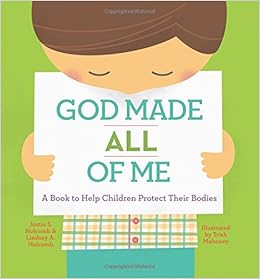

4. God Made All of Me by Justin and Lindsey Holcomb

This is an excellent book to help children understand their bodies and to be able to recognize sexual abuse.


5. The Secret Thoughts of an Unlikely Convert by Rosaria Champagne Butterfield


Of all the books I read this year, this one is my favorite. Rosaria Butterfield, a former lesbian and tenured English professor at Syracuse University, now a born-again believer, pastor's wife, and homeschool mom, has one of the most beautiful and life-altering testimonies you'll ever read. She is authentic, and her words are convicting and eye-opening. This is a must-read!


COREY'S BOOKS:


1. The Church History ABCs by Stephen Nichols and Ned Bustard

This is an extremely fun book for children, highlighting 26 men and women from church history ranging from Augustine to Ulrich Zwingli. Kristen and I enjoy this book more than Callen does (at least for now).

2. How to Read a Book by Mortimer Adler & Charles VanDoren

This might not sound like an interesting book, especially if you can already "read", but this book will expand your world by equipping you with the resources to truly interact with good books.  How to Read a Book is probably one of my favorite books that I read this year.

3. Discipling by Mark Dever

This is a short and easy read by Mark Dever that provides practical insight into the church’s responsibility to invest in the spiritual good of one another.

4. On the Incarnation by St. Athanasius

I've now read this book twice, and both times blessed me as Athanasius makes the case for God becoming man. This book is both devotional and theological, and it’s short. Be sure to get the copy with C.S. Lewis’s introduction - he makes an excellent case for reading old books.
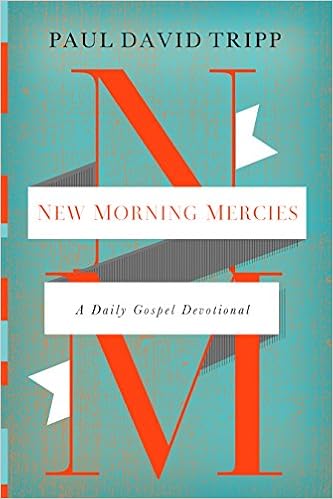
5. New Morning Mercies by Paul David Tripp

I recommend reading anything by Paul Tripp, not because you will love it, but because you need it. This daily devotional gets straight to the heart, at least it gets to mine.


6. The Confessions by St. Augustine

Augustine is a master theologian and philosopher who showcases the undeserving grace of God in his life. (I highly recommend books 1-9 for everyone and books 10-13 for the more philosophical minds.)


KRISTEN'S PODCASTS:

1. The Briefing from Dr. Albert Mohler

A "daily worldview analysis about the leading news headlines and cultural conversations" (albertmohler.com).


2. Mortification of Spin from the Alliance of Confessing Evangelicals, featuring Carl Trueman, Todd Pruitt, and Aimee Byrd

Good-natured sarcasm with practical and biblical insight regarding contemporary Christian topics.


COREY'S PODCASTS:


1. The World and Everything in It from WORLD Radio

I listen to this 30 minute podcast Monday through Friday to get my fill of world news.


This is one of the best fictional podcasts I have listened to.  The story is told from the perspective of a journalist who investigates a small town where everyone disappeared over ten years ago. (For mature audiences.)

3. Serial

This podcast has some vulgar language and is for a mature audience, but if you like investigative journalism this is the podcast for you. The 2 seasons are different, but I found both captivating and intriguing.  I gained insight into the world around me, but my main reason for listening was sheer entertainment.


You Are Here is a sci-fi audio drama podcast that caught my attention because of its "choose your own adventure" model. If you read the Choose Your Own Adventure novels, then you will love this podcast. Plus, you will enjoy the 20th and 21st century pop culture references that the main character has programmed into her AI implant.


HONORABLE MENTION (Books):

Designed for Joy (Strachan & Parnell)
Christ or Chaos (DeWitt)
The Pastor as Public Theologian (Strachan & VanHoozer)
The Big Picture Story Bible (Helm & Schoonmaker)
Openness Unhindered (Butterfield)

Friday, December 23, 2016

Why Did God Become Man?

As we approach Christmas, we are offered a season to reflect on the breathtaking mystery of the virgin who conceived and bore a son who was to be called Immanuel – which means God with us (Matthew 1:23). How perplexing it is to consider the intricacies of God becoming flesh and dwelling among men (John 1:1-18)! So, as we contemplate the mystery of the incarnation, the question I want to address today is “Why?” Why did the Son of God leave Heaven to come down to earth and dwell among men?

Some think that God was lacking in knowledge, so He decided to become a man. Others think that He was simply bored in Heaven and needed to spice things up, so He decided to come down and dwell among us. And still others think that He desired to become man so He could experience that which the eternal God cannot experience: death.

While those explanations are lacking in substance and theological explanation, let me offer two reasons why Jesus really did become man (Note: My thoughts are inspired by St. Athanasius’s On the Incarnation).

1)    Jesus became man to turn that which is corrupted into incorruptibility.

All humans are born into the corruption of their parents. This has been the case since the first transgression against God in the Garden (See Genesis 3 & Romans 5). Indeed, everyone born of man is corrupted by nature. Therefore the Son of God took on human-form and was born of “a spotless and stainless virgin, ignorant of man, pure and unmixed from intercourse with men” (St. Athanasius). He delivered His body over to death, so that the corruption in man might be undone, thus turning corrupted human beings to incorruptibility.

The Son of God did not just come to experience death for Himself, as some would say. The Son of God came to die a sinner’s death on behalf of everyone so that we might be freed from the corruption of the body and death.

2)    Jesus became man to taste death that the mortal might pass to immortality.

Death reigned over man after the first transgression against God in the Garden, and as such, all taste death; therefore, Jesus became man so that He might die and ultimately show Himself superior to death by rising up from the grave three days later, giving hope to all mankind. "For as by a man came death, by a man has come also the resurrection of the dead. For as in Adam all die, so also in Christ shall all be made alive” (1 Cor. 15:21-22). Jesus has shown Himself superior to death, and in Him that which is dead is made alive.

When Jesus Christ became man, He laid aside His glory, He voluntarily restrained His power, He accepted hardship, isolation, ill-treatment, malice, and misunderstanding. As J.I. Packer writes, “He accepted a death that involved such agony – spiritual even more than physical – that His mind nearly broke under the prospect of it.  It meant love to the uttermost for unlovely human beings, that we through His poverty might become rich.”

2 Corinthians 8:9 – “For you know the grace of our Lord Jesus Christ, that though He was rich, yet for your sake He became poor, so that you by His poverty might become rich.”

During this Christmas season, let us marvel at God’s great love for us and consider in humility that He became like us in order to restore our corruption to incorruptibility that we might pass from mortality to immortality all for His glory.


~Corey

Tuesday, December 13, 2016

We are Idol Factories

“What has your ear in your daily life? If it’s not God and His Word you will grow complacent.” This statement was made by our preacher during last week’s sermon, and it rings particularly true in my life. Looking back I can clearly see that every time I’ve grown complacent in my spiritual walk, it was because something else stepped in and grasped my attention and affections. Recently I went through a very dry spell in my spiritual life, and I couldn’t pinpoint the problem. Thankfully, through prayer, the Word, and my husband gently prodding me as to whether unconfessed sin could be the issue in my life, God revealed to me that an idol had, in fact, crept in unnoticed. What was the idol? I’m sad to say it was screen time; too much social media, email, television, Internet, yada, yada, yada. Leave it up to me to take something that can be helpful and turn it into an idol. It was only when I recognized the idol I created that I was able to confess and repent of my sin, and it was as though a huge weight had been lifted off me.


Idols can come in many different forms. I tried to brainstorm all the different idols I’ve had in my life as far back as I can remember, even in my childhood. Here’s the list I came up with: man's approval and acceptance, beauty, good grades, new clothes, attention from the opposite sex, having a baby, social media, television, the desire for a house that looked like it was straight off the pages of Better Homes and Gardens, and wanting to look super-spiritual. I’m sure I didn't think of all my past idols - my list is most certainly incomplete - but my point is this: Life is a constant battle. With so many people, things, and ideas in this world vying for our affections, what are we supposed to do? We must saturate ourselves in God’s Word and keep our eyes focused upon Christ. We must confess our sin quickly and rest fully in God’s grace. And we must cut off our idols and root ourselves wholly in Christ. Here’s a quote I jotted down from the sermon this past Sunday: “The battle of the Christian life is fought in the mind but won at the cross.” Amen! The battle has already been won in Christ. His shed blood and atonement for sins brings about the ultimate victory for those who trust in Him. This life is not easy, nor is it supposed to be, but God’s amazing grace and saving power seal us “with the promised Holy Spirit, who is the guarantee of our inheritance until we acquire possession of it, to the praise of his glory” (Ephesians 1:13b-14)

Love,
Kristen

Wednesday, December 7, 2016

The "Me"llennial Problem

Over the past several years there has been an explosion of conversation about millennials leaving the church, and the statistics are pretty daunting. For instance, millennials (those born from approx. 1980-2000) represent the largest group of religiously unaffiliated people in the US. While there are many in the millennial category that have never attended church at all, there are also many who once attended church regularly but have now completely dropped out of church altogether. Recently, I read an article that gave twelve reasons why millennials are done with the church. Of those twelve reasons I picked out four of them that I’ve found to be common critiques of the church by millennials. Here’s my response:

REASON #1: “Nobody’s listening to us.”

·  Further Explanation: This complaint is not unique to the church and it is not unique to millennials alone. We see many young people today protesting that their voices are not being heard on topics such as politics or education. But as we look specifically at millennials’ complaints regarding the church, their criticism is that they perceive problems within the church and that no one is listening to their critiques and solutions. 

·  Response: As I explore this complaint I must ask this question of millennials: To whom within the church have you tried to talk with about this issue? And how did you approach the conversation? As a millennial myself, I have found plenty of people in the church who are longing for fresh ideas and new strategies. But fresh ideas are typically not welcomed if you aren’t interested in the good of the whole congregation. Oftentimes I hear individual, self-centered solutions from millennials that offer little to no value for anyone other than those in the millennial category. So, if you’re in a church where no one is listening to you, ask yourself why. Is the problem with them or with you? Are your criticisms of the church entirely self-serving or are you humbly trying to understand and relate to others while listening to their ideas and concerns as well? Recently I read that we must seek first to understand before seeking to be understood. 

REASON #2: “We don’t want to be preached to.”

·  Further Explanation: The idea here is that millennials crave relationships, not preaching. While preaching might have reached our parents and grandparents, it just isn’t reaching millennials because millennials want to be mentored. 

·  Response: My question here is: Why not preaching? Do you think you have a better way? Jesus of Nazareth was a preacher. His disciples were preachers. The prophets who came before them were preachers. And the church throughout the last 2000 years has been saturated with preachers. So, if you want to be discipled or mentored, then sit under sound biblical preaching. Sure, we can have one-on-one relationships with other believers who sharpen us in the faith, but nothing can replace sound biblical preaching.

It’s possible that the reason you don’t want to be preached to is because you haven’t actually heard true, biblical preaching. It’s possible that you don’t want to be preached to because, sadly, you’ve only heard someone tell you what’s right and wrong, and you’ve never heard preaching that heralds the beauty and glory of God in the face of Jesus Christ by the power of the Holy Spirit. The problem might not be with preaching in and of itself, but that you have never really heard preaching.

REASON #3: “We want to be valued.”

·  Response: What does it mean to be valued? I’m guessing that many of the people who have this complaint grew up with presents spilling out from under their Christmas trees every year (as did I), had at least three meals every day (as did I), and had closets full of clothes (as did I). Then you go into the church and it isn’t designed solely with you in mind. You walk into that building expecting to be served and exalted (although no one would admit it out loud). But even if you were served and exalted, it would never ever be satisfying. The only real value any of us can ever find in this life is in Jesus Christ alone. So if your church is preaching hope in Christ alone, then that’s a good place to be. Your most important need in this world is not to have people cater to your desires, but to see yourself in light of Jesus Christ and to repent and cry out to God Almighty. We all rebel against God and now He calls us to repentance. But because our hearts are so hardened by sin, we won’t respond to that call apart from divine intervention. So you say you want to be valued? Find a church that values your soul and tells you of your great need for Jesus Christ.

REASON #4: “The church doesn’t care enough about the poor and needy.”

·  Response: I agree with this statement, particularly in an American context. Our nation is greedy, and we often look out for ourselves first and foremost. But instead of criticizing everyone around you, including the church, I must ask: What are you personally doing for the poor and needy? For a long time I criticized churches for spending their money on big, fancy buildings when, in my mind, they should have been feeding the poor. But in the mean time, do you know what I was doing? I was pointing fingers and criticizing others for how they spent their money rather than examining my own generosity (or lack thereof).

Much more can be said about this subject, but let me offer one reminder to the church as a whole: While Christians are certainly called to be generous and compassionate, the church has been given a mandate to preach the Gospel and to make disciples of all the nations. By no means am I suggesting that we ignore our neighbor’s physical needs, but I do want to warn against helping our unbelieving neighbors only in a physical manner, all the while making them more comfortable on their way to hell. We must not neglect to share with them the only message that can actually save their soul – the glorious truth of the Gospel of Jesus Christ.

In conclusion, there’s no question that these four points (and many others) could be discussed at much greater length, and I would love to examine them further, but let me make a couple suggestions to millennials and all professing believers: 1) Make sure that you are truly examining the church and yourself in light of God’s Word, rather than in light of your own thoughts and feelings, and 2) If you find a church that is not doing what you think it should be doing, maybe God has sent you there to fill the gap. So, instead of complaining that a particular church isn’t ministering in a certain fashion, why not join with that church and do the work of ministry that God has laid upon your heart? Remember, the church is designed to build up, not to tear down. So you will either be a part of the building up or you will be fighting in vain to tear it down.  

Questions? Comments? I’d love to discuss these issues with you. Feel free to email me at cjohnson@providence-bc.com.

~Corey

Coming soon: The next blog in my eschatology series will examine the question: 
When is the end of the world?

Monday, November 21, 2016

Slow Obedience is No Obedience

Around two years ago I became a parent, and since that time I've learned more lessons than I can count. Much of what I've learned has been difficult to accept, mostly because as I attempt to raise a helpless little human, my own selfishness is brought to the surface. Ouch. 

Without question one of the biggest and most impactful lessons I've learned pertains to obedience. In trying to teach my son the importance of quick obedience I use phrases like "to delay is to disobey" or "slow obedience is no obedience," but how many times do I delay in my obedience to God? 

How many times have I prayed that God would change my heart, but then I don't take any action? I know the right thing to do yet I don't do it. The Christian life doesn't involve simply lounging in a comfy chair with a little umbrella in our drink while we wait for God to change us or to change our situation. No, as believers we are to obey God's Word. Immediately. Whether we feel like it or not. We must will to do God's will (John 7:17). We must quickly repent of our disobedience and focus our eyes upon Christ.

In her book, The Secret Thoughts of an Unlikely Convert, Rosaria Butterfield says: "Repentance requires greater intimacy with God than with our sin. How much greater? About the size of a mustard seed. Repentance requires that we draw near to Jesus, no matter what. And sometimes we all have to crawl there on our hands and knees."

Oftentimes we don't understand why we are having to endure a particular trial, and wallowing in self-pity sounds a lot easier than obedience to God's Word. But our feelings will change only after we have obeyed. "Obedience comes before understanding" (Butterfield). May we never presume upon God's grace. We must rely upon His grace to carry us through life, but that doesn't mean we just wait for God to give us more grace before we take action. He has already given us everything we need in Christ. We must take action, we must deny ourselves, we must follow God's Word, and God will graciously change us into the likeness of Christ as we seek to follow and obey Him.

Love,
Kristen